Saturday, 11 November 2023

SEDI Advocates Use Of Mercury-Free Alternatives In Tooth Filling

 ... Kicks against the use of amalgam, says it does much harm to the body

By Isaac Eranga

As part of activities in commemorating the 2023 Mercury-Free Dentistry Week, the Sustainable Environment Development Initiative (SEDI) has called for the use of mercury-free alternatives in tooth filling, saying amalgam does much harm to the body. 

This was contained in a press statement signed by the Executive Director of SEDI- Dr. Tom Aneni. According to the statement, "Mercury-free fillings are tooth-friendly, amalgam is tooth unfriendly.  Amalgam is a colonial relic which requires removal of good tooth matter, creating weaker teeth and the need for future repairs.  

"By contrast, the alternatives are tooth friendly.Glass ionomers are child-friendly: atraumatic restorative treatment (ART) does not require a power drill, or an electrical source.  Hence ART can be done in remote villages where electrical service is intermittent. 

"Composites are technically superior to amalgam, preserving the tooth rather than removing good tooth matter, and easier for future repairs, making them a better price in the long run. 

"Mercury is so toxic it is the sole subject of an international convention whose goal is to end man-made uses of mercury: the Minamata Convention.   

"Mercury is the most vaporous of the heavy metals, so a dental clinic still placing amalgam is a very dangerous work environment, especially for young women.  

"In the teeth, amalgam releases mercury vapor into the body, including (a) the brain, (b) kidneys, (c) the mother’s breast milk, and (d) the female uterus.   Because their brains are developing, at gravest risk of permanent injury for mercury are children – meaning we must also protect nursing mothers and pregnant women. 

"Mercury-free fillings preserve tooth structure: Mercury-free fillings can help prevent future caries: Mercury-free fillings are long lasting; Competent dentists can do alternatives as quickly as amalgam.

"Mercury in fish and vegetables:  Amalgam’s mercury converts to methylmercury in the fish.  Continued use of amalgam in Africa means that children with a fish diet are at serious risk of brain damage.  Dental mercury gets into the ground and from there into vegetables people eat. 

"Dentistry is one of the largest users of mercury in the world.  The number of dentists in Africa is growing rapidly; it is essential that both new and old are trained in mercury-free dentistry, or the mercury pollution will get much worse. In Africa, dental mercury is often diverted via the black market for use in small-scale gold mining", the statement said.

Friday, 18 August 2023

Poor Rural Environmental Health Programmes in Nigeria is due to governmental insensitivity, says Life Boat

News Blogger: Isaac Eranga

Benin City: Lack of governmental priority, inadequacy of manpower, and poor implementation of projects have been attributed to the unsatisfactory state of the rural environmental health service in Nigeria. 

This attribution was made by the Executive Director of Life Boat Initiative for Societal Development - Mr Osarobo Ogbevoen. He said the Nigerian government has not given sufficient priority to rural environmental health.

"Until now, the planning of environmental health Programmes has been conducted in a rather piecemeal haphazard fashion, without any attempt to analyse the needs and determine the objectives. There have been no specific plans for the development of environmental health activities within the framework of general socio-economic development plans, but only a series of uncoordinated'micro-projects', most of which are designed as emergency measures to offset the dangers arising from rapid rural community expansion.

"A more forward-looking approach and the use of prospective studies to help government draw up long-term plans would be highest priority and the government should always consider this activity as an integrated part of national health plans.

"The need to use available national resources for improving sanitation standards is very paramount, and rural environmental health planning is a sine qua non. The success and failure of environmental health will depend on the quality of the supporting administrative structures.

"The programmes should therefore be planned, organised and executedso as to improve the entire rural population and directed towards prevention and control of environmental health disease.  In the context of rural areas, these activities should concern water supply, the collection, treatment and disposal of liquid and solid wastes, control of insects, rodents and other vectors, housing and food sanitation", says Life Boat boss.

Thursday, 20 October 2022

Dental Amalgam: facts, dangers, way forward

By Isaac Eranga - a Health Journalist

History was made when the West African Summit on Phasing Out Amalgam was held in Abuja on 20 May 2014, bringing together NGO leaders from the ECOWAS nations of Benin, Côte d’Ivoire, Ghana, Nigeria, and Senegal, and also from the North African country of Tanzania.  They adopted the Abuja Declaration, then invited NGO leaders from across Africa to join as signatories.

Cognisant of the fact that mercury, which is used in dental amalgam, is a restorative material that is approximately 50% elemental mercury, and is a notorious heavy metal of global concern that is known to be a potent poison of the human nervous system.  

Aware that dental mercury accounts for 10% of annual global mercury consumption and 260-340 metric tons of mercury pollution around the world each year.   

Knowing  that dental mercury enters the environment via many release pathways, polluting air via cremation, dental clinic releases, and sewage sludge incineration; water via human waste and dental clinic releases to septic systems and municipal wastewater; and soil via landfills, burials, and fertilizer.  

Understanding that once dental mercury is in the environment, bacteria in soils and sediments may convert it to methylmercury, “a highly toxic form that builds up in fish, shellfish and animals that eat fish, thereby making fish and shellfish the main sources of methylmercury exposure to humans.   

Aware of existence of significant literature that show that methylmercury can damage children’s developing brains and nervous systems even before they are born.”  

Recognising that in the dental workplace, uncontrolled mercury vapours are a major occupational risk, especially to young women of childbearing age,   and that amalgam is not consistent with modern dentistry; unlike less invasive mercury-free filling materials, amalgam placement requires the removal of a substantial amount of healthy tooth matter, which weakens the tooth structure and can lead to more expensive dental care later. 

Recalling that throughout the Minamata Convention negotiations, the Africa Region worked very hard to make sure that reduction in dental amalgam use specifically be included in the treaty, forcefully arguing for the phase out of amalgam generally and for an end to amalgam in milk teeth specifically.  

Recalling further that at the crucial Pretoria regional consultation, 9th May 2012, the African Region boldly adopted a plan for dental amalgam – the phase-down steps – that coupled with subsequent amendments was enshrined into the treaty.

Applauding that the newly-adopted Minamata Convention on Mercury, the world recognizes that dental amalgam is a major environmental pollutant and requires each participating nation “to phase down the use of dental amalgam.”

Considering the fact that Mercury-free dental restorative materials are far less expensive than dental amalgam when environmental and societal costs are factored in.   

Considering further that the costs of using mercury-free glass ionomers for Atraumatic Restorative Treatment or ART (including retreatment) is about half the cost of amalgam without retreatment, making this mercury-free technique significantly more affordable in low-income communities, particularly in areas without electricity or dental clinics.

Noting that mercury-free dental restorative materials are effective according to the World Health Organization report Future Use of Materials for Dental Restoration, which says “recent data suggest that RBCs [resin-based composites] perform equally well” as amalgam – and offer additional oral health benefits because “Adhesive resin materials allow for less tooth destruction and, as a result, a longer survival of the tooth itself.

Noting further that, this Abuja Declaration falls fully within the spirit of the Libreville Declaration on Health and Environment in Africa (August 2008).

Encouraged by the WHO’s call for funding agencies to take the initiative and encourage the replacement of amalgam as the material of choice for posterior teeth with adhesive systems.”

Regretting the fact that pro-amalgam lobby groups view the Minamata Convention as the chance to profiteer in Africa by actually phasing up amalgam by promoting expensive amalgam equipment, such as separators.  

Cognisant of the fact that, separators have no value in Africa as there is no infrastructure to collect and store the mercury from dental offices. 

Seeing the dangers that is inherent in amalgam and in an effort to curtail it, a stakeholder forum was held in Benin City, Edo State in October, 2017. The forum was put together by Sustainable Environment Development Initiative (SEDI), represented by the Executive Director - Dr. Tom Aneni, with support from World Alliance for Mercury-Free Dentistry (WAMFD), represented by Barr. Charlie Brown. During the stakeholders forum, the following communique and attendant recommendations were made: 

1. Mercury is a chemical of global concern owing to its long range atmospheric transport, its persistence in the environment once anthropogenically introduced and its ability to bio-accumulate in ecosystems. 

2. Exposure to mercury can harm the brain, heart, kidneys, lungs, cardiovascular system and immune system, particularly in women, unborn children and infants.

3. Low level of awareness among Nigerians on the dangers of mercury in dental amalgam. 

4. Dental amalgam is still widely used and is the most affordable dental filling material serving the restorative health needs of Nigerians.

5. The limited availability of oral health manpower, service facilities and materials for dental restoration, and the high cost of dental restorative treatment.

6. Limited number of dental clinics and centres to provide services for the Nigeria’s teeming population.

7. Recognition of the negative impacts of mercury on people’s health and the environment led to the adoption and signing of Minamata Treaty by over 128 nations of the world on the 10th October, 2013 at Minamata, Japan. Nigeria has signed but is yet to ratify and become a party to the convention. However, there are efforts to initiate programmes that will ensure significant reduction in mercury use.

8. The convention entered into force on 15th August, 2017 having been ratified by 84 countries. 

9. Alternative direct restorative materials such as composites, compomers and ceramics can be used for restoration of carious and non-carious cavities involving anterior and posterior teeth based on specific selection criteria and indications.

10. Aware that the Federal Ministry of Environment, Federal Ministry of Health, UNIDO and other stakeholders have completed the Nigeria Minamata Initial Assessment (MIA) report to usher the national implementation of the convention. 

Recommendations 

1. In compliance with the provisions of the Minamata convention, government should initiate a coordinated multi-sectoral approach for an effective phase down of use of dental amalgam in Nigeria.

2. Updating dental schools training curriculum to emphasize mercury-free dentistry.

3. Implementation of a phase down work plan. This must also include legislative review and development of guidelines, gathering baseline data and developing the national overview.

4. Initiation of demonstration projects and application of best available technology and environmental practice in the management of dental amalgam.

5. Promotion of alternatives/transition to alternatives by a concession for imported alternative restorative materials.

6. Engaging the public and media as well as other stakeholders in awareness creation on the health impacts of mercury in dental amalgam and the need for prevention of caries.

7. An urgent need for Nigeria to domesticate the Minamata convention as soon as possible.

The above brought about the Edo State Resolution to end Dental Amalgam for children under 16, pregnant and breastfeeding women as of 1st July 2018.


Saturday, 13 November 2021

Africa Theological Institute gets full accreditation

In a bid to promoting high academic standard, the Africa Theological Institute (ATI) has secured a full accreditation from Global Partnership for Theological Accreditation and Mission, South Korea, to offer certifications ranging from Diploma to Master's Degrees in both Evangelism, Missions and Theology.

This was made known recently in Benin by the Rector of the institute- Dr. Sunday Aigbefoh. He said ATI formerly known as Africa Theologian Bible Institute for Global Opportunities, has trained Leaders that are currently doing exploits for the Lord in their various areas of Ministry. 

"One thing that is unique with this institute is that the tuition fee is affordable even to low income earners. This is to give those that are called by God apple opportunity to be trained and certified. 

"One other unique feature of ATI is that the lecturers are well trained in various theological disciplines, and their lecturing style is participatory and highly interactive. That is a communication policy in ATI. This is to make the courses practical in nature.

"We are located in the heart of Ugbowo- 16, Oviasogie Street, opposite Ojo junction, off Uwasota Road, Ugbowo, Benin City. Our dedicated lines include +2348035630262, +2348078272708. Call us and kick-start your theological certification journey, as admission is currently in progress", said Dr. Sunday Aigbefoh.


Saturday, 11 September 2021

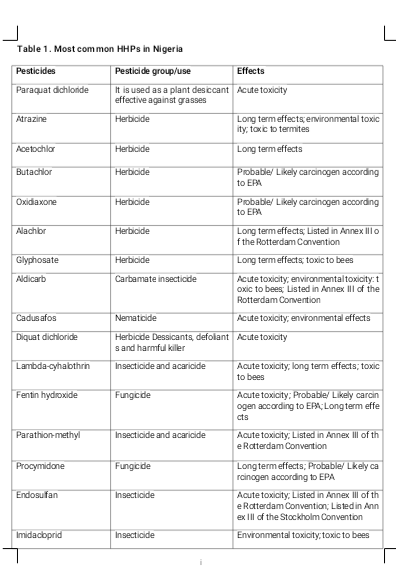
Highly Hazardous Pesticides: Awareness and Precautions

 By Sustainable Development for Environment Initiative (SEDI), Nigeria


International Pollutants Elimination Network (IPEN)                           What is a pesticide?

A pesticide is any substance, or mixture of substances of chemical or biological ingredients intended for repelling, destroying or controlling any pest, or regulating plant growth. [1]. Pesticides can also be used as vector control and agriculture control agent in public health programmes [2]. The group includes herbicides, insecticides, and fungicide so. Pesticides may be used for crops on the field, harvested produce, agricultural commodities or animal feeds and fish, 2.1% of pesticides used in the world come to Africa [3]. The cost of labor, choice of pesticide application, and the promise of swift pest control have made the use of pesticides judicial or rampant all over the world [4]. A survey on pesticides usage in Nigeria indicated that annually about 15,000 metric tons of pesticides comprising about 135 pesticide chemicals marketed locally under 200 different produce brands and formulation were imported during 1983-1990 thus making Nigeria one of the largest pesticides users in sub-Sahara Africa [5].

More than 95% of the applied herbicides and 98% of insecticides reach non-target soil micro-organisms than their target pest, as they are sprayed proportionately across the entire field, irrespective of the affected areas [6]. Hence, of the total quantity of applied pesticides, about 0.1% reaches the target organisms while the remaining quantity pollutes the soil and environment. There are 25 million occupational pesticide poisonings each year among agricultural workers in developing countries alone [7].

What are highly hazardous pesticides (HHPs)?

Pesticides are inherently hazardous, and among them, a relatively small number of Highly Hazardous Pesticides (HHPs) cause disproportionate harm to environment and human health including: severe environmental hazards, high acute and chronic toxicity [8]. Pesticides that appear to cause severe or irreversible harm to health or the environment under conditions of use in a country may also be considered to be and treated as highly hazardous”.

Stakeholder reflection on the failure of existing pesticide controls to reduce the incidence of damage to yhuman health and environment led FAO and WHO to launch a new initiative for a progressive ban on Highly Hazardous Pesticides (HHPs) in 2006. The HHP initiative recognizes that WHO Class II pesticide active ingredients (‘moderately hazardous’ in terms of acute mammalian toxicity as determined in laboratory testing), such as endosulfan, paraquat and chlorpyrifos, can be as problematic in reality as the ‘extremely’ and ‘highly’ hazardous pesticides which make up WHO Class I. This conclusion is also drawn from PAN’s poisoning cases data in West Africa [9] and locust cost externality assessment in Senegal [10]. In 2009 PAN International published its ‘List of Highly Hazardous Pesticides’ as a contribution to UN discussions [11]. It provides a catalogue of the most harmful pesticides that is more comprehensive, and takes into account more potential pesticide hazards, than current listings by official bodies.

HHPs are considered to represent a fraction of all registered pesticides worldwide; in some cases as small as 6 percent (Southern African countries) while in other cases as high as 30 percent of the registered products [8]. They are still in use in many low and middle income countries because of inadequate regulation and monitoring and are primarily used in agriculture and in public health (DDT and Clothianidin) for malaria vector control, but also used in domestic gardens. They have been detected in air, water, soil, animals and humans and have been found in local food systems and global food commodities such as bananas, coffee and rice, but the most contaminated crops are fruits and vegetables. They can also cause loss of biodiversity, kill fish and birds and poison wildlife. Therefore, HHPs should be progressively phased out by more sustainable alternatives.


Impacts of HHPs

The impacts of the highly hazardous are divided into human health and environmental impacts. 

(A) Human health impacts 

Human health effects can be acute or chronic poisoning, linked to a range of serious illnesses and diseases from respiratory problems to cancer. Exposure can occur in many ways. Farmers and farm workers can be exposed through the treatment of crops, plants and grain stores. Rural residents living next door to farms can be exposed to pesticide drift or from contaminated air and ground or surface water. Consumers of food crops sprayed with pesticides can be exposed through pesticide residues. Consumption of crops and plants grown under chemical pest control like fruits and vegetables without proper washing for example, [13] reported the presence of paraquat residues in some commonly consumed vegetables in Abeokuta, Nigeria. However, no direct health impact was reported in the study.

Acute poisoning

Acute poisoning means that they can cause harmful or lethal effects after a single episode of ingestion, inhalation or skin contact. The symptoms are evident shortly after exposure or can arise within 48 hours. This can include:

- respiratory tract irritation, sore throat and/or cough

- allergic sensitisation

eye and skin irritation

- nausea, vomiting, diarrhoea

- headache, loss of consciousness

- extreme weakness and or ultimate death.

- Chronic or long-term poisoning

These are harmful effects over an extended period, usually following repeated or continuous exposure at low levels, can be very serious illnesses. They are linked to the development of Parkinson’s disease; asthma; depression and anxiety; attention deficit and hyperactivity disorder; and cancer, including leukaemia and non-Hodgkin’s lymphoma.

Environmental impacts 

1. Impact on aquatic organisms: Pesticide drifts or residues lead to deterioration of water quality, hence reducing the number of aquatic organisms.

2. Water pollution and contamination: Spraying or use of hazardous pesticides and incorrect pesticides application approach adjacent to drinking water resources may lead to their contamination, and could result to pollution of surface and underground water.

3. Soil degradation / contamination: Long-term excessive use of pesticides will cause higher pesticide resistance and pesticide residues in the soil which will cause soil contamination.

4. Extinction of non-target species: impact on the non-target species (bees, natural enemies, etc.).

5. Air pollution: Poor handling, application and disposal of pesticides products such as empty containers and obsolete products will cause air pollution.

6. Soil fertility imbalance: Pesticides cause imbalance of soil fertility which directly affects crop yield.

Pesticide going to the soil during application (Photo credit to SEDI. Location –Edo State, Nigeria) 

Effects of using specific HHPs

There is certainty that the application of Endosulfan pesticide is moderately persistent in Ibadan soil and hinders availability of some soil nutrients [14]. There was 85% population reduction of nematode as a result of Endosulfan application. Total DDT and heptachlor found in Ibadan ground water exceeded the WHO limits for these chemicals in drinking water [15].

Unintended costs incurred in using HHPs

The UN Food & Agriculture Organization (FAO) analyzed externalities caused by spraying high concentrations of organophosphate insecticides (mainly malathion and fenitrothion) for locust control operations in Senegal during the last outbreak in 2003 - 2005 [8]. It estimated external costs of over 8 million Euros including: 2.75 million for environmental costs; 2.5 million on human health; 2.1 million in agricultural production losses; and 0.7 million in damage prevention costs.

Unintended costs of using HHPs include:

1. Increased cost of production: The use of HHPs in agricultural farming systems leads to an increase in cost of production due to the fact that these pesticides are expensive.  

2. Maintenance cost: maintenance of sprayers such as power driven models with motor and hand operated sprayers. Hand operated sprayers such as Lancet, Falcon, Knapsack, Motorized mist blower, Ultra Low Volume (ULV), and Electrodyne sprayers need to be maintained regularly through procedures like washing and oiling with light oil to prevent corrosion [16]. 

3. Cost of pesticide poisoning treatment: First aid for pesticide poisoning victims and hospital bills.  

4. Cost of pesticide poisoning prevention: During spraying personal protective equipment (PPE) are worn to reduce contact with the pesticide. These include coveralls, long rubber gloves, goggles, respirators, rubber boots and waterproof hat. These PPE are usually expensive and increase the cost (unavailable in some cases or places when needed).

5. Environmentally pollution: The use of HHPs causes environmental degradation and pollution [16]. 

Applying pesticides without wearing PPE. (Photo credit to SEDI. Location –Edo State, Nigeria) 


References:

[1] FAO/WHO, 2016. The International Code of Conduct on Pesticide Management - Guidelines on Highly Hazardous Pesticides. ISBN 978-92-5-109187-6. 

[2] WHO, 1990. The public health impact of pesticides use in agriculture. World Health

Organization, Geneva. 

[3] Food and Agriculture Organization of the United Nations. 2019. FAOSTAT Statistical

Database; FAO: Rome, Italy.

[4] Bahadur, S., Verma, S.K., Prasad, S.K., Madane, A.J., Maurya, S.P., Gaurav Verma, V.K., 

Sihag, S.K. 2015. Eco-friendly weed management for sustainable crop production-A review. 

Journal of Crop and Weed 11: 181–189.

[5] Osibanjo, O.; Ikem A.; Sridhar, M.K.C. and Sobande A. 2002. Evaluation of groundwater quality characteristics near two waste sites in Ibadan and Lagos, Nigeria. Water, Air and Soil Pollution 140 (1-4): 307-333. 

[6] Miller, G.T. 2004. Sustaining the Earth; Brooks/Cole: Monterey County, CA, USA; ISBN

9780534400880. 

[7] Jeyaratnam, J. 1990. Acute pesticide poisoning: a major global health problem. World Health 

Statistics Quarterly 43: 139-144.

[8] FAO and WHO. 2019. Detoxifying agriculture and health from highly hazardous pesticides

 – A call for action. Rome. 

 [9] PAN UK, 2008. Hazardous pesticides and health impacts in Africa. Food & Fairness briefing 

no. 6, London. Via http://www.pan-uk.org/Publications/ 

[10] Leach, A., Mullié, WC, Mumford, JD and Waibel, H. (2008). Spatial and historical analysis 

of pesticide externalities in locust control in Senegal- first steps. Imperial College London, 

University of Hanover and FAO.

[11] PAN Germany, 2009. PAN International List of Highly Hazardous Pesticides Via 

http://www.pan-germany.org/

[12] Pesticide Action Network International, 2016. PAN International List of Highly Hazardous 

Pesticides - 12/2016.

[13] Akinloye O. A.; Adamson I.; Ademuyiwa O. and Arowolo T. A. 2011. Paraquat toxicity and its mode of action in some commonly consumed vegetables in Abeokuta, Nigeria. International Journal of Plant Physiology and Biochemistry 3(4): 75-82.

[14] Aikpokpodion, P.E., Lajide, L., Ogunlade, M.O., Ipinmoroti, R., Orisajo, S., Iloyanomon, C.I. and Fademi, O. 2010. Effect of Endosulfan on soil and root-knot nematodes in cocoa. Journal of Applied Biosciences 26: 1640-1646. 

[15] Osibanjo, O. and Aiyejuyo, A. 1994. Organochlorine pesticide residue in foodstuff of animal origin in Nigeria. Bull Environ Toxicol 54:460-464.

[16] Ekeleme, I.Y. Dugje, F. Ekeleme, A.Y. Kamara, L.O. Omoigui, A.Tegbaru, I.A. Teli, 

And J.E. Onyibe. 2008. Guide to safe and effective use of pesticides for crop production in Borno State, Nigeria. 23 pp.

(Photo credit to SEDI. Location –Edo State, Nigeria) 


Friday, 3 September 2021

5 Natural Ways To Keep Your Kidneys Safe

Creammedia Sep 2, 2021

Kidneys are one of the most subtle and susceptible organs inside a mortal torso. Kidneys begin forfeiting their function once a mortal torso comes to be 35 years old. Their filtration capability generally begins decreasing at a constant rate. In fact, a current announcement discloses that kidney functions drop by 10% every decade after an individual enters his 30s. As a result, kidneys also become highly sensitive to several infections at later phases in life.

Although it's true that your kidneys will begin ceasing to function gradually, there are means by which you can lessen the harm rate. Thus, it is essential for you to contemplate some helpful tips to keep your kidney safe.

1. Drink lots of Water: You need to gulp as much water as feasible. It will not only enable your torso to stay hydrated, but also encourage the kidneys to clean every poison. Also, this will enable you to regulate your torso temperature, reduce indigestion, and help blood volume. Thus, it is essential that you drink at least 2 litres of water every day.

2. Avoid Smoking and Drinking: Smoking is very toxic for health, although it does not implicate the kidneys immediately, it decreases kidney function significantly. Undue liquor consumption can disrupt a torso's hormonal control and electrolyte proportion. These upheavals also implicate the kidneys very badly, and they will slowly diminish your kidney's energy.

3. Reduce your Salt Intake: I am certain you know that salt is accountable for improving the quantity of sodium in nourishment. Excessive salt in food can make you suffer from high blood pressure. You can also become a patient of more toxic cases like the formation of kidney stones. This is the reason you should reduce your salt infusion.

4. Go for Daily Exercises: Recent surveys indicate that chubbiness and overweight are the main problems behind kidney crises. If you are overweight or suffering from adiposity, then your kidney function will reduce at a more abrupt scale. Thus, you must exercise regularly to forfeit weight or keep it in check.

5. Don't Resist to Urinate: This is an extremely familiar practice, mostly discerned in women. They are usually careful about hygiene, and thus, suppress the urge to urinate unless they find a neat latrine. They do not comprehend that avoiding this urge puts a great burden on their urinary bladders and kidneys. They should urinate more frequently to make sure their kidneys are safe from danger.

Friday, 20 August 2021

The world’s most vulnerable people are suffering and dying from effects of the “shadow pandemic"

The international community's must recommit to the health of women, children, and adolescents, write Helen Clark, board chair of PMNCH and former prime minister of New Zealand, and Kersti Kaljulaid, president of Estonia and newly appointed United Nations’ Secretary-General’s global advocate for Every Woman Every Child.

The spillover effects of the covid-19 pandemic on women, children, and adolescents have been under-reported in the media, yet they are significant. While women, children, and adolescents are not more likely than other population groups to get ill or die from covid-19, they are experiencing interruptions to essential health and social services caused by lockdowns and by the diversion of resources to manage the virus. The impact of this amounts to a “shadow pandemic,” which is affecting many millions of people.

Surveys conducted over the past year have revealed the scale of the impact: 39% of 124 countries surveyed reported a drop in coverage of family planning services; 38% reported drops in the coverage of maternal health services (antenatal and postnatal); and up to 200 000 additional stillbirths could occur over 12 months in 117 low and middle income countries.

We should heed the words of a pregnant woman in Kenya who feared being left to give birth without expert care and support: “I am worried because I’m not sure if I will find the facility open or if I will find nurses during delivery”, she said. Sadly, she is far from alone. 

In India, an adolescent girl bears witness to the lack of even the most basic sanitary supplies, saying: “Girls in quarantine tore up and used their own clothes as they didn’t have access to sanitary pads.”

An 18 year old Colombian woman with polycystic ovarian syndrome reports being unable to get any kind of medical appointment during the pandemic: “I stopped getting my period, and I want to find out what’s going on, but I can’t.”

These are themes repeated by disadvantaged and vulnerable people the world over. They desperately need healthcare, services, and supplies, and are entitled to receive them, but the pandemic has torn away the fragile support structures they rely on.

More than one third of countries are still reporting disruptions to immunization services. This particularly puts children at risk. Our attempts to manage covid-19 must not compromise our campaigns against other killer diseases, such as measles and polio.

Act together, act swiftly

These disruptions to essential services cannot continue. The international community must come together swiftly to protect the most vulnerable from the indirect effects of covid-19, even as it urgently addresses the virus itself through mass vaccination and other public health measures.

It is not simply a matter of preventing suffering and hardship. Women, newborns, children, and adolescents are at risk of dying as a result of the covid-19 pandemic without ever catching the disease.

In our respective roles of board chair of Partnership for Maternal, Newborn and Child Health (PMNCH) and newly appointed United Nations global advocate for Every Woman Every Child, we call on world leaders to commit to bold, meaningful, and co-ordinated global action on women’s, children’s, and adolescents’ health.

In 2015, global leaders agreed on sustainable development goals (SDGs) for the next 15 years. Progress toward them, however, has stalled, or even reversed, as a result of the pandemic. The world urgently needs to get back on track to achieving them—including the targets of the health SDGs and of the Every Women Every Child Global Strategy for Women’s, Children’s, and Adolescents’ Health (2016-2030).

All efforts to get back on track must be driven by the central principle of the SDGs: “leave no one behind.” At the moment, millions are slipping further and further behind, with those caught in the cross-currents of conflict, fragile situations, and migration bearing a disproportionate burden. Getting back on track will require an unprecedented global effort, co-ordinated and led at the highest level and resourced by massive fresh investment. Working in partnerships and through multilateral cooperation will be critical.

Progress on the health SDGs was already too slow before the pandemic began—with huge health inequities persisting between countries and regions. This is highlighted by regional disparities in maternal deaths. Globally, while the number of maternal deaths dropped 35% between 2000 and 2017, sub-Saharan Africa and South Asia accounted for 86% of all maternal deaths.

Vaccines, equity, and data

So, what should the world be doing to protect the most vulnerable? A high priority is to do everything possible to ensure the equitable distribution of covid-19 vaccines through the international COVAX initiative. Access to therapeutics and testing, and to other vital tools and commodities such as personal protective equipment (PPE) and medical oxygen, also needs to be massively scaled up.

PMNCH lists other urgent priorities in its Call to Action on COVID-19 campaign. This has seven key goals: protecting access to sexual, reproductive, maternal, newborn, child, and adolescent health (SRMNCAH) services; improving gender equality and access to sexual reproductive health and rights; improving quality care; supporting and protecting frontline health workers; ensuring stronger social safety nets; clean water and sanitation; and prevention of violence.

An equity based approach is essential to ending the covid-19 pandemic, but this depends on first gaining a detailed understanding of where inequities exist and who is affected. In May, the World Health Organization presented the 194 member states of the World Health Assembly with stark evidence of how badly the pandemic is affecting women’s, children’s, and adolescents’ health. It highlighted weaknesses in data systems, and especially the inability to monitor disruptions to essential health services in real time. To improve the volume and quality of health data dramatically, we strongly recommend expanding access to and use of digital technologies in health. These can be transformative, as we’ve already seen in Estonia. With the right infrastructure in place, they are a great equalizer, serving and uniting a whole country and enabling the most disadvantaged to access and shape health services.

We urge countries and the international community at large to recommit to the health and wellbeing of women, children, and adolescents. The pandemic has set progress back, but we owe it to the most vulnerable people in our world to get back on track and build back better and fairer. 

Helen Clark is the PMNCH board chair. She was prime minister of New Zealand from 1999–2008. From April 2009 she was administrator of the UN Development Programme, serving two terms.

Competing interests: none declared.

Kersti Kaljulaid is president of Estonia. Recently appointed the first global advocate of the United Nations Secretary-General for Every Woman Every Child (EWEC). In 2018-2020, Mme Kaljulaid was the co-chair to the High-Level Steering Group for EWEC. 

Competing interests: none declared.

Related

Originally published: BANK